

Simple To Use, Precise By Design: How ShadiBiodata Built A Marriage Biodata Maker For All Of India
Almost every arranged marriage in India begins with the same document. Before two families meet, before an astrologer looks at anything, somebody sits down and types out a biodata. Name, date of birth, height, caste, gotra, what the father does, what the brother does, two lines about the person themselves. It gets forwarded on WhatsApp or printed and carried to a meeting. A family reads it in about ten seconds and decides whether there will be a second conversation.
For a document carrying that much weight, it’s usually put together badly. Most people build one in Word, or pay a cyber cafe a couple of hundred rupees, and the result shows. Labels in shouting capitals. An entire education history crammed into one line. A photograph stretched out of shape. All the information is there, and the presentation quietly works against the person it describes.
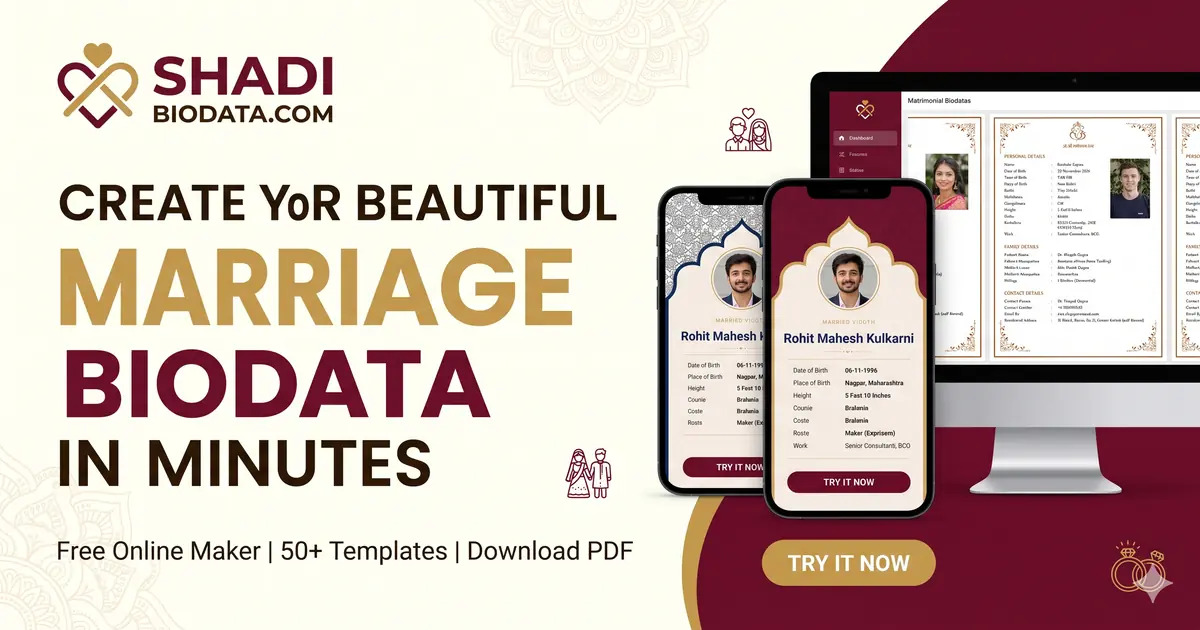
https://shadibiodata.com/, built in Baner, Pune by a small team at Joshi Solutions, tries to fix that without asking anyone to learn design. Fill in a form, pick a design, download a print-ready PDF. No account, nothing to install. Plenty of tools claim that kind of simplicity. What’s less common is the precision sitting underneath it.
Start with the AI, because the decision made there runs against where most of the industry is heading. The model in ShadiBiodata doesn’t write your biodata. It corrects it. Labels shouting in capitals get turned back into ordinary Title Case. Typos and stray spacing are cleaned up. Wording that got away from whoever was typing gets simplified. When somebody dumps a whole academic history into a single field, something like “10th, 12th, B.Tech – XYZ College Pune”, it separates that into distinct entries with proper labels of their own.
What the model cannot do is invent. Full name, date of birth, time of birth and height are locked, and it isn’t permitted to touch them. It’s also barred from adding any fact that wasn’t already in the form. Anyone who has watched a writing assistant cheerfully improve a person into somebody they aren’t will understand why the restraint matters here. Every line of a marriage biodata gets verified by a family later.
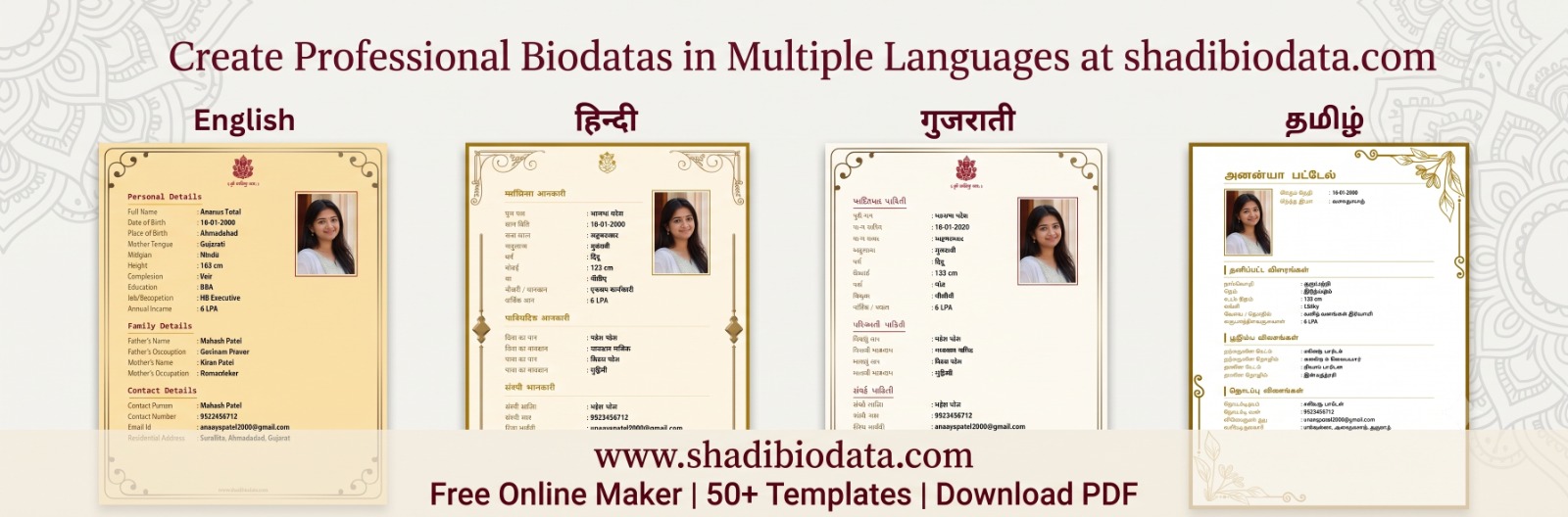
The same care shows up in translation. Fill the form in English and the biodata can come out in twelve Indian languages: Hindi, Marathi, Gujarati, Tamil, Telugu, Kannada, Malayalam, Bengali, Punjabi, Odia and Urdu, including the right-to-left script that Urdu needs. Ordinary machine translation tends to break exactly the parts that matter most. Dates change format, numbers get rewritten, and proper nouns come out translated rather than spelled. Here, dates and times and numbers pass through untouched, while names, degrees and place names are transliterated into the target script instead of translated. The reader sees the name as it actually sounds, written in the letters they read. A family in Coimbatore shouldn’t have to receive a proposal in a second language.
Precision turns up again in places most software treats casually. Two to four photographs can be arranged into a collage, composited at full A4 width at 300 dots per inch, because these documents get printed and handed across a table rather than only forwarded. The same details can be laid out as a single page in two columns or run across several pages, and the renderer reports back whether the content genuinely fits on one page instead of silently squashing it until it does.
For Hindu profiles there’s a step that saves an argument later. Enter a date and time of birth and the app works out Nakshatra, Rashi, Nadi, Gan and Manglik status on its own. Those are precisely the fields an astrologer asks for when kundli matching begins, and they’re the ones families most often guess at or leave empty.
The design library runs to [more than fifty marriage biodata https://shadibiodata.com/templates/ covering Hindu, Muslim, Christian, Buddhist and neutral styles. They’re tagged rather than merely listed. Religion, style, tone, layout and colour are scored against what the user says they want, so a Muslim family after something formal and easy to read isn’t left scrolling through sixty thumbnails hoping to recognise the right one.
Whatever the user types stays inside their own browser, and uploaded photographs expire by themselves. The company is independent of the matrimonial platforms and says so plainly: the finished PDF belongs to the family, and it goes wherever they send it.
- “We built this for the family reading it, not for the person filling it in. Everything we do comes down to whether that reader trusts what’s in front of them.”
- “AI can write anything now. That’s exactly why we decided ours would only correct, never invent. A biodata that says something untrue costs a family far more than a badly formatted one.”
- “A biodata is often the first impression a family makes. It should be in their own language and it should be exact. Neither of those should cost anyone design skills or a trip to a cyber cafe.”
There’s a particular kind of product that looks unremarkable because every difficult part was handled before the user ever arrived. That’s the category ShadiBiodata is aiming at. A simple tool, and an exact one.