

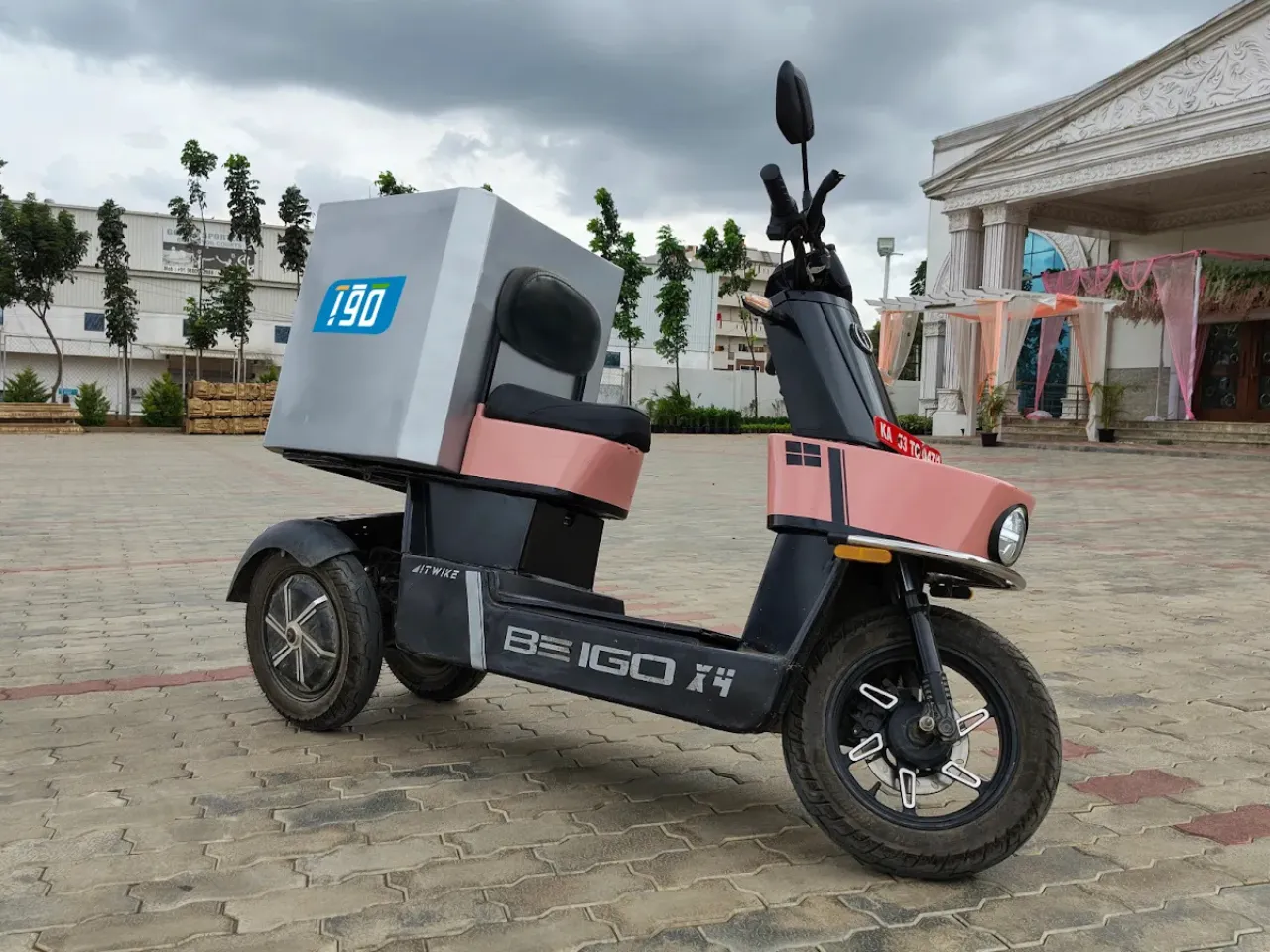

India’s EV revolution has a new dark horse—and it doesn’t look like anything you’ve seen before. While most startups are chasing scooters, bikes, and cars, iGoWise Mobility (iGo) is betting on something wildly different: a three-wheeled electric pickup trike that promises to be safer, cheaper, and more efficient than anything on the road today.
And investors are buying the dream. The Bengaluru-based startup just raised ₹8.2 crore from ISB Angels and others to take its flagship vehicle, BeiGo, from prototype to commercial launch.
A Trike That Thinks It’s A Truck
BeiGo isn’t your average e-rickshaw or scooter. iGo calls it India’s first electric pickup trike—a rugged utility vehicle designed for both city traffic and rural terrain.
What makes it different?
- Patented anti-topple leaning + self-balancing tech: No tipping over on sharp turns.
- TwiiGo lightEV platform: Built to handle potholes, slopes, and crowded lanes.
- Triple-disc anti-skid braking system: Safety you won’t find on regular trikes.
- Compact but powerful: Up to 5X more cost-effective and 3X more energy-efficient than global peers, while being half the size.
It’s the missing link between two-wheelers and mini-trucks—perfect for last-mile logistics, urban delivery, and small businesses.
Real-World Tested, Not Just Lab Hype
Unlike many flashy EV prototypes, BeiGo has already hit the road. iGo claims its trikes have clocked over 1 lakh kilometers of real-world usage data—giving the startup a massive edge in reliability and design improvements.
After 32 months of development, BeiGo is finally gearing up for a commercial launch.
Big Plans: 1,500 Trikes In 18 Months
The startup isn’t crawling—it’s sprinting. Over the next 12–18 months, iGo plans to roll out 1,500 BeiGo trikes through fleet partners including Hala Mobility and Elektrik Express across Bengaluru, Hyderabad, Pune, and Panjim.
This fleet-first strategy will get BeiGo on the streets fast, proving its value in high-demand markets like logistics and last-mile delivery.
Boosting Rider Incomes—By ₹7,500 A Month
For drivers, BeiGo isn’t just a greener ride—it’s a money-maker. iGo says its trike can increase monthly income by up to ₹7,500 compared to conventional options, thanks to lower running costs and better efficiency.
In a country where every rupee matters, this could be the biggest reason why riders and fleet operators choose BeiGo.
Why Investors Are Betting On iGo
The fresh ₹8.2 crore will be used to:
- Cut production costs with tooling and automation
- Strengthen customer experience and after-sales service
- Advance R&D for new features and models
- Support working capital to fulfill existing orders
The strategy is clear: build trust, scale production, and flood the market before competitors catch up.
Could This Be India’s Most Underrated EV Startup?
India’s EV race is crowded with two-wheeler unicorns, electric car hopefuls, and e-rickshaw giants. But iGo stands out because:
- It’s creating a new category, not fighting existing ones.
- Its tech (anti-topple + self-balancing) solves a real safety problem.
- Its fleet-first model ensures instant visibility and adoption.
- It blends economic gains with environmental benefits.
If BeiGo clicks, iGo could quietly become the go-to brand for utility EVs in India—a category no one else owns yet.
Final Word
In a world of cookie-cutter scooters and flashy EV cars, iGo’s BeiGo is refreshingly different. Rugged, compact, and intelligent, this trike could transform how India moves goods, powers delivery fleets, and boosts rider incomes.
With fresh funding, 1,500 vehicles ready to hit the roads, and a first-mover advantage, iGo isn’t just another EV startup—it’s a category creator.
The big question now: will India embrace the electric trike the way it embraced scooters and e-rickshaws? If yes, iGo could be the startup everyone underestimated.