

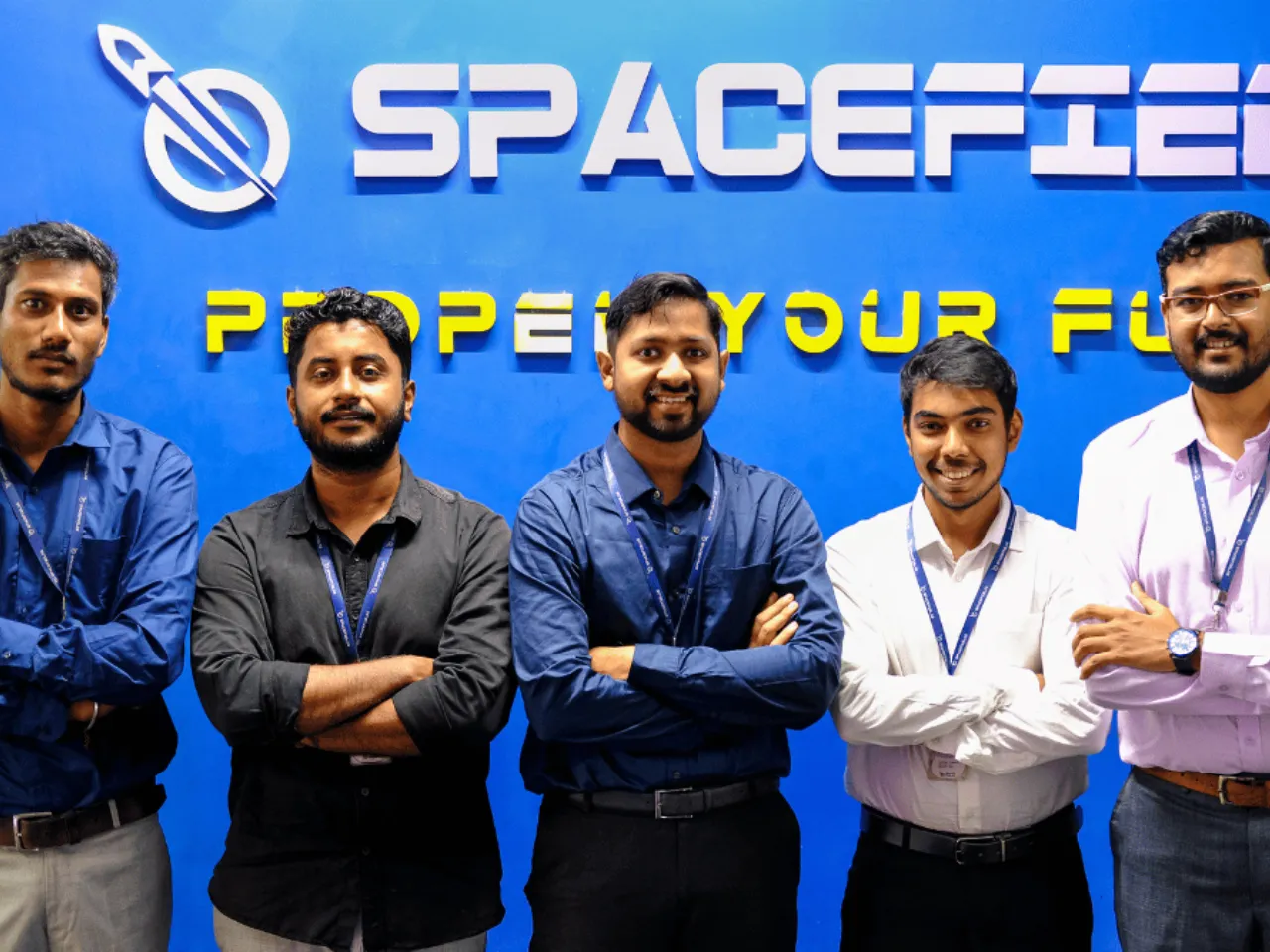

What if India’s next big leap in space doesn’t come from ISRO, but from a Bengaluru garage-turned-lab? Meet SpaceFields, a little-known deeptech startup that’s suddenly caught the attention of some of the country’s biggest investors. And they’ve just poured $5 million (Rs 42 crore) into it.
Why? Because SpaceFields is building something that could decide who wins the next frontier in defence and space: rocket propulsion systems.
The Deal That Has Everyone Talking
In its latest pre-Series A round, SpaceFields bagged $5 million, led by Globaz Technologies, Rockstud Capital, and Venture Catalysts.
But here’s where it gets really interesting: the round also brought in Nithin Kamath’s Rainmatter, Burla Angel Network, Faad Capital, SIDBI, O2 Angels, and even the MeitY Startup Hub.
That’s not your everyday investor list — that’s a who’s who of India’s most trusted capital. And they’re betting big on SpaceFields.
Why Propulsion? The Secret Sauce Behind Rockets
Let’s break it down. Rockets, missiles, and satellites might grab headlines — but none of them can even move an inch without propulsion systems.
Propulsion is what takes satellites to orbit, ensures rockets don’t burn out mid-flight, and gives defence systems the precision and range they need.
And right now? This is one of the hardest, most underdeveloped sectors in India. That’s where SpaceFields comes in.
From Idea to $5 Million in Four Years
Founded in 2021 by Apurwa Masook, Rounak Agrawal, and Sudarshan Samal, SpaceFields is laser-focused on solving this complex problem.
It’s not chasing shiny PR projects or “space tourism” headlines. Instead, it’s getting its hands dirty, designing and manufacturing propulsion systems that defence agencies, aerospace giants, and space explorers desperately need.
And investors clearly see the potential. This funding comes just a year after the startup’s $1.3 million seed round. Growing funding at this speed in deeptech? That’s rare.
What’s Next: Where the Money Will Go
This isn’t just about celebrating a cheque. SpaceFields has bold plans for the $5 million:
- Scaling up manufacturing – moving from prototypes to large-scale production.
- Securing certifications – the golden ticket for working with defence and aerospace bodies.
- Expanding teams – adding top talent in engineering, operations, and business to accelerate growth.
In other words: turning from a startup into a serious defence and space-tech player.
Why Investors Are Betting Big
Look closer and you’ll see why this deal matters.
- India is opening up space to private players. The government’s reforms through IN-SPACe and partnerships with ISRO have created a once-in-a-generation opportunity.
- Global demand is exploding. Every country and private company racing into orbit needs better, cheaper propulsion.
- Defence is the ace card. With rising geopolitical tensions, India’s military is investing heavily in cutting-edge tech. Propulsion isn’t optional — it’s urgent.
- The founders know their stuff. In deeptech, ideas are easy, execution is everything. And SpaceFields has already shown it can deliver.
No wonder investors are lining up.
Bengaluru: The New Space Capital
It’s no accident that SpaceFields is based in Bengaluru. The city isn’t just India’s IT hub anymore — it’s becoming the beating heart of space-tech innovation.
From Skyroot Aerospace and Agnikul Cosmos (building rockets) to Pixxel (building satellites), Bengaluru startups are rewriting the rules of India’s space race.
And SpaceFields, with its focus on propulsion, could easily become the specialist every rocket builder and defence player turns to.
The Road Ahead: Risky but Rewarding
Of course, it’s not going to be a smooth ride. SpaceFields still faces massive challenges:
- Navigating strict regulations in defence and space.
- Scaling manufacturing without compromising safety.
- Competing with global propulsion giants already decades ahead.
But here’s the catch — if SpaceFields nails it, the payoff isn’t just millions. It could position India as a world leader in propulsion technology.
The Bottom Line
SpaceFields’ $5 million raise isn’t just another funding headline. It’s a wake-up call.
India’s startup ecosystem isn’t just building apps and fintech anymore. It’s building the engines that will power rockets, satellites, and defence systems of the future.
And if a scrappy Bengaluru startup can capture the imagination of top investors with rocket science, maybe — just maybe — India’s next space hero won’t wear an ISRO badge. It’ll be a startup logo.