

A Pitch That Wasn’t Smooth, But Honest
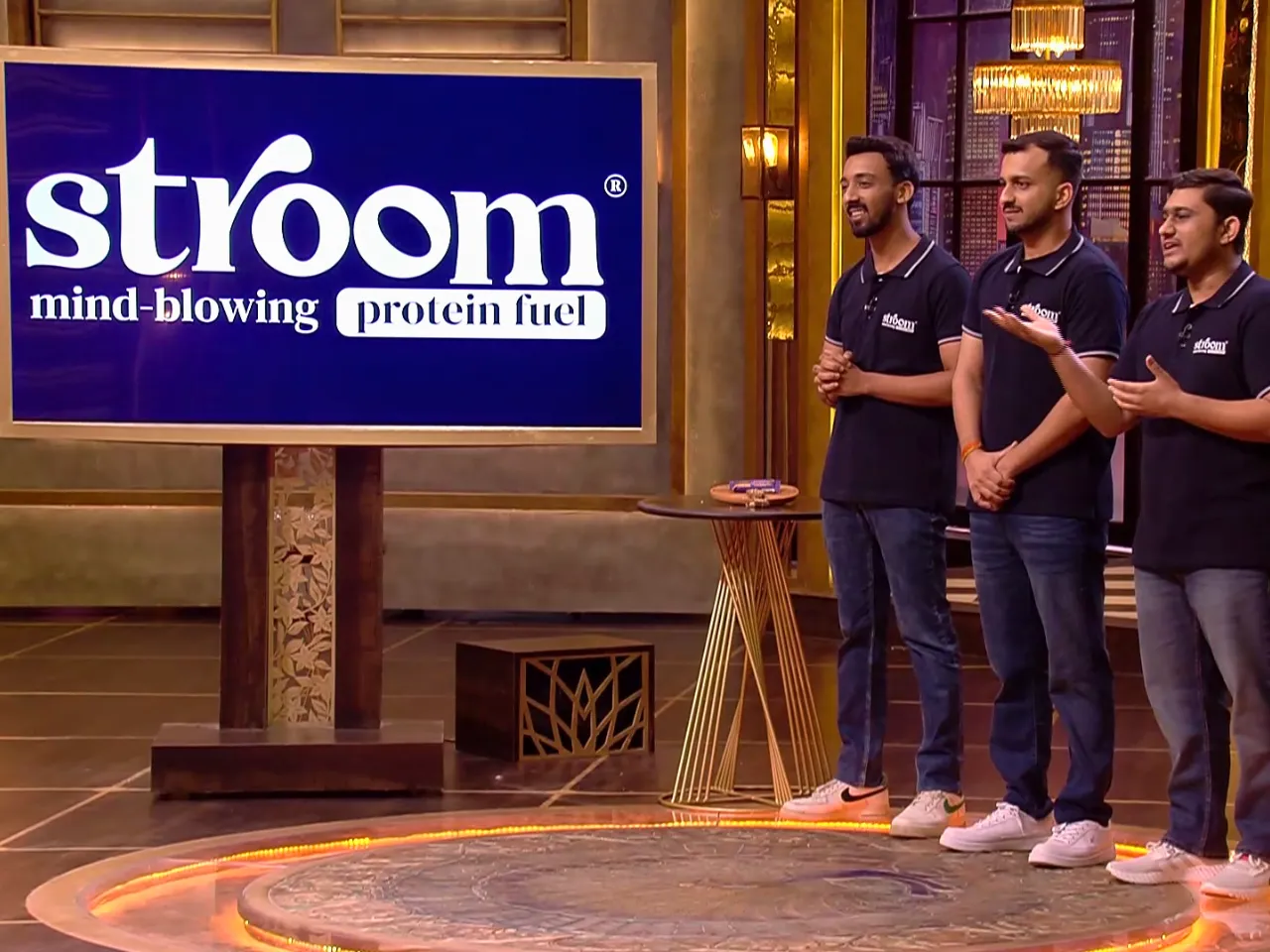
Walking into Shark Tank India is never easy, especially in a crowded space like health and nutrition. When protein snack brand Stroom entered Shark Tank India Season 5, the founders knew they were stepping into a tough room. Their goal was simple but ambitious: make protein snacks that taste good and fit naturally into everyday Indian eating habits.
What followed was not a flawless pitch or instant praise from the Sharks. Instead, Stroom faced sharp questions about taste, product claims, and packaging honesty. But despite the challenges, the startup walked away with a Rs 1 crore deal, proving that clarity, traction, and the willingness to accept feedback can still win investor trust.
The Founders and the Idea Behind Stroom
Leaving Comfort to Build Something New
Stroom was founded by Darshan Gattani, Shiven Chaturvedi, and Rohan Shah. All three founders had stable careers and even overseas opportunities, but they chose to return to India to build something of their own.
The brand officially launched in May 2022 with a clear belief: protein should not feel like a supplement or medicine. Instead, it should feel like food people already enjoy.
Their approach was to take familiar Indian and global snack formats, such as bars and wafers, and improve them with added protein. The focus was not on hardcore gym users but on everyday consumers who want better nutrition without changing their eating habits too much.
What Makes Stroom Different?
Familiar Snacks with Added Protein
Unlike many protein brands that focus on powders or highly processed products, Stroom positioned itself as a snacking brand first. The idea was to make protein easy, tasty, and accessible.
Stroom uses a blend of milk protein and soy protein in its products. According to the founders, this combination helps balance nutrition while also improving taste and texture. Many protein snacks fail because they taste chalky or artificial, something Stroom wanted to avoid from the start.
The Sharks were invited to taste the products during the pitch, and reactions were mixed. While some liked the concept and texture, others felt the taste could still be improved. This immediately set the tone for a more serious and detailed discussion.
Strong Sales Numbers Catch the Sharks’ Attention
Growth That Could Not Be Ignored
While taste is subjective, numbers speak loudly in the Tank. Stroom shared that it recorded Rs 2.42 crore in net sales in FY24–25, which impressed several Sharks.
A large part of this growth came from quick-commerce platforms, where impulse snacking and convenience play a big role. The founders explained that consumers are increasingly looking for healthier snack options, and protein-based products are slowly becoming part of mainstream shopping carts.
This traction helped Stroom stand out in a competitive market filled with nutrition startups that struggle to move beyond niche audiences.
Packaging and Claims Come Under Fire
Tough Questions on Transparency
The conversation took a serious turn when Viraj Bahl raised concerns about Stroom’s packaging and marketing claims. He pointed out that the phrase “no refined sugar” could be misleading when ingredients like honey and cookie bits were still being used.
From a consumer trust perspective, this was a critical issue. Health-conscious buyers often read labels carefully, and unclear or confusing claims can damage credibility over time.
To their credit, the founders did not argue or deflect. They accepted the feedback and acknowledged that the packaging needed correction. They agreed that clearer communication was necessary to maintain transparency and long-term trust with customers.
This moment showed maturity and honesty, qualities that often matter as much as the product itself on Shark Tank India.
The Ask and the Valuation Debate
A Bold Valuation Meets Shark Scrutiny
Stroom entered the Tank asking for Rs 1 crore in exchange for 2 percent equity, valuing the company at Rs 50 crore. As expected, this sparked debate among the Sharks.
Some felt the valuation was ambitious given the early stage of the brand and the improvements still needed in product and messaging. Others acknowledged the strong growth but wanted more comfort on margins and brand clarity.
Multiple offers and counteroffers followed, with different Sharks proposing revised equity structures and valuations.
The Final Deal: Rs 1 Crore Investment Secured
Vineeta Singh and Kunal Bahl Step In
After negotiations, Stroom closed a deal with Vineeta Singh and Kunal Bahl. The two Sharks jointly invested Rs 1 crore for 2.5 percent equity, along with an additional 2 percent advisory equity.
This brought the company’s valuation down to Rs 40 crore. While lower than the original ask, the deal came with strategic backing from two investors known for building strong consumer brands.
For Stroom, the partnership offered more than just capital. It brought access to brand-building expertise, distribution insights, and guidance on improving packaging, messaging, and scale.
Why This Deal Matters
Lessons for Consumer Startups
Stroom’s Shark Tank journey is a reminder that not every successful pitch is perfect. The founders faced criticism, tough questions, and uncomfortable moments, especially around claims and labeling.
Yet, their willingness to listen, accept feedback, and show real business traction helped them secure a deal. In a category where trust and taste matter deeply, honesty became a strength
, not a weakness.
What’s Next for Stroom?
Fixing Packaging, Improving Taste, and Scaling Smartly
After Shark Tank India, the real work begins for Stroom. One of the immediate priorities for the brand will be correcting its packaging and claims to ensure full transparency. Clear labeling is essential in the health and nutrition space, where consumer trust can make or break a brand.
Product improvement is another key focus. While the Sharks saw potential in the taste and texture, feedback suggested there is room to make the snacks even more enjoyable. For a mass-market snack brand, repeat purchases depend heavily on taste, not just nutrition.
With Vineeta Singh and Kunal Bahl on board, Stroom is also expected to sharpen its branding and positioning. The challenge will be to stand out in a crowded protein market without overpromising or confusing customers.
The Bigger Picture: Protein Goes Mainstream in India
A Growing Opportunity with High Expectations
Stroom’s journey reflects a larger trend in India. Protein is no longer limited to gym-goers or athletes. Office workers, students, and families are slowly becoming more aware of daily protein needs.
However, as awareness grows, so do expectations. Consumers want snacks that are healthy but also tasty, affordable, and honestly marketed. Brands that try to cut corners or rely on buzzwords often face backlash.
Stroom’s experience on Shark Tank India highlights how important it is for nutrition brands to balance marketing with responsibility.
Final Thoughts
Stroom did not walk into Shark Tank India with a flawless product or an easy story. Instead, it brought ambition, growing sales, and a clear vision, along with a few rough edges that the Sharks were quick to point out.
By accepting criticism, showing strong numbers, and staying open to change, the founders managed to turn a tough conversation into a Rs 1 crore investment. Their deal proves that Shark Tank India rewards not just confidence, but honesty, adaptability, and real market traction.
As Stroom moves forward, its success will depend on how well it applies the lessons learned in the Tank. If it can improve taste, clean up its messaging, and continue scaling thoughtfully, it has a real chance to become a recognizable name in India’s everyday protein snacking space.