


Bengaluru Steps Into a New Space Era
India’s space journey has entered a bold new chapter. OrbitAID Aerospace, a rising spacetech startup, has launched a 6,500 sq. ft. Research & Development (R&D) facility in Bengaluru dedicated to On-Orbit Servicing and Refueling (OOSR)—a cutting-edge field that could completely change how satellites operate in space.
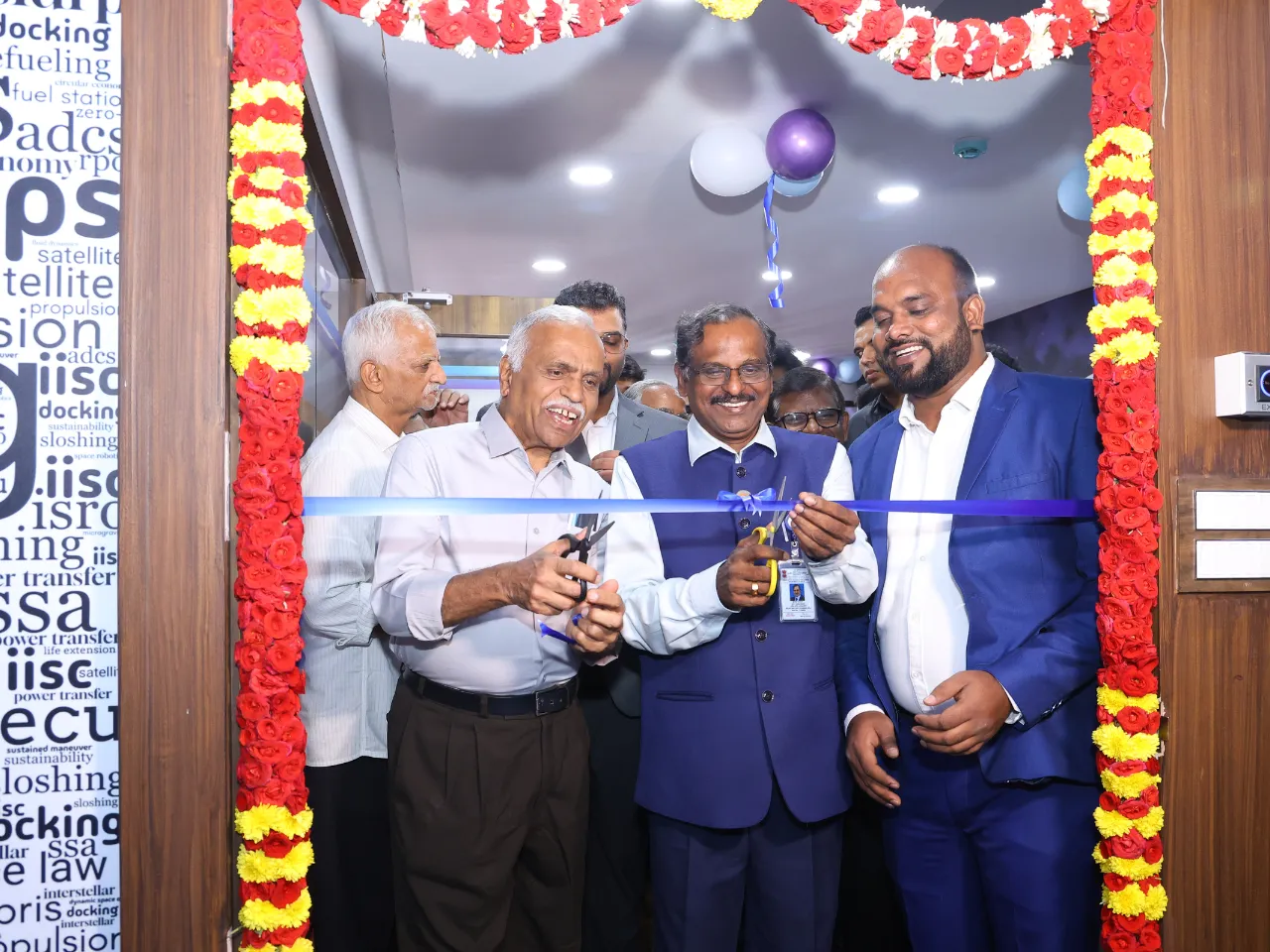
What makes this even more significant is the backing of the country’s top space authority. The facility was inaugurated by Dr. V. Narayanan, Chairman of the Indian Space Research Organisation (ISRO), underscoring the importance of private-sector innovation in India’s future space missions.
With an investment of over $2 million, OrbitAID is betting big on technology that could save millions of dollars for satellite operators and propel India into the global spotlight for space sustainability and advanced servicing.
Why Satellite Refueling Is a Game-Changer
Traditionally, satellites are launched with a fixed amount of fuel. Once they run out, their mission ends—even if the satellite hardware is still perfectly functional. The result? Space debris and wasted investment.
OrbitAID’s focus on on-orbit refueling aims to solve this exact problem. By enabling satellites to be refueled in space, their lifespan could be extended by years. This means:
- Lower replacement costs for operators.
- Reduced risk of space debris clogging Earth’s orbits.
- More efficient use of satellites already in orbit.
It’s not just about refueling. OrbitAID’s technology will also explore in-space servicing, allowing satellites to be repaired, maintained, or upgraded without ever leaving orbit. This innovation puts India in a position to compete with global space giants working on similar solutions.
India’s Largest Commercial RPOD Facility
At the heart of OrbitAID’s new centre is its infrastructure for Rendezvous Proximity Operations & Docking (RPOD)—the process of one spacecraft approaching and docking with another in orbit. This is the cornerstone of in-space servicing and refueling.
The new facility includes:
- A high-end control room designed to simulate and operate RPOD missions.
- A class 10,000 cleanroom, ensuring dust-free conditions for satellite assembly and integration.
- Fuel transfer facilities to test safe and efficient in-orbit refueling systems.
According to OrbitAID, this is not only India’s largest commercial RPOD facility but also among the largest of its kind in the world. That’s a huge milestone for a startup barely a few years old.
ISRO’s Endorsement Matters
Having ISRO Chairman Dr. Narayanan inaugurate the centre gives OrbitAID instant credibility. It signals that India’s space establishment sees value in collaborating with startups, rather than leaving innovation solely in the hands of government institutions.
This partnership-like approach is in line with India’s broader space reforms, which aim to encourage private companies to take on larger roles in building satellites, launch vehicles, and now, servicing technologies.
For OrbitAID, the ISRO connection could open doors to future collaborations, joint missions, and even global partnerships.
Bengaluru: The Hub of India’s Spacetech Revolution
It’s no accident that OrbitAID chose Bengaluru for its facility. The city is already home to ISRO and dozens of upcoming spacetech startups, making it India’s unofficial “Space Capital.”
From satellite manufacturers to rocket builders, Bengaluru’s ecosystem provides:
- Access to top engineering talent.
- Proximity to government research institutions.
- A growing culture of space-focused entrepreneurship.
With OrbitAID’s new R&D centre, Bengaluru is now also home to India’s first large-scale commercial RPOD infrastructure. This cements its position as the city leading India’s next leap into advanced space missions.
The Global Context: Racing With Space Giants
OrbitAID is not alone in this race. Globally, companies like Northrop Grumman, Astroscale, and Orbit Fab are developing similar technologies for satellite refueling and space debris management.
However, the field is still in its infancy. Success isn’t just about having the technology—it’s about proving reliability, safety, and scalability in actual space missions.
By investing early and establishing one of the world’s biggest RPOD facilities, OrbitAID is placing India firmly on the global map of space servicing players. If successful, it could mean lucrative contracts from satellite operators worldwide.
Why This Matters for India
The benefits of OrbitAID’s work go beyond just one startup. If India can build a strong presence in the OOSR sector, the country stands to gain:
- Global leadership in satellite servicing, a market expected to be worth billions in the coming decade.
- Stronger collaboration opportunities with space agencies like NASA, ESA, and JAXA.
- Strategic independence, ensuring Indian satellites can be serviced without relying on foreign players.
This aligns with India’s broader ambitions—after successful missions like Chandrayaan-3 and Aditya-L1, the country is no longer just aiming for space exploration. It’s aiming for space dominance in commercial and strategic sectors.
Final Word: A New Dawn for Indian Spacetech
OrbitAID’s $2 million investment and ISRO’s stamp of approval are more than symbolic. They represent a shift in India’s space sector—from launching satellites to actively extending their life, reducing space junk, and building sustainable orbital infrastructure.
For a country that has long been praised for cost-effective missions, this move adds a new layer: world-class innovation in satellite servicing.
As OrbitAID’s R&D centre gets to work, all eyes will be on Bengaluru. Can this Indian startup help the world refuel its satellites—and in the process, refuel India’s global space ambitions?