

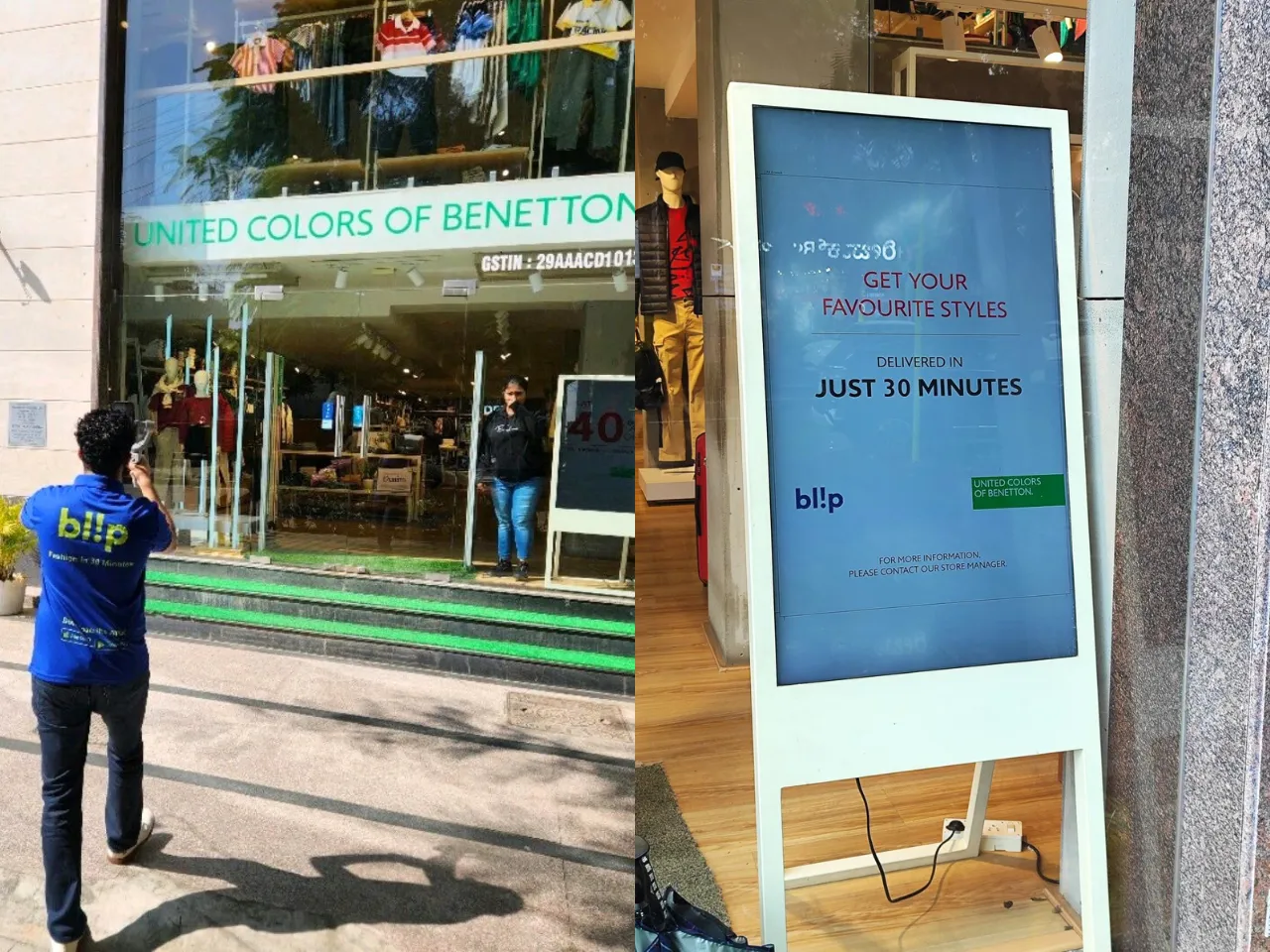

They Promised Clothes at Your Door in 30 Minutes. Now They’re Gone.
A year ago, Blip was being called the “Zepto of fashion.” A sleek new app, a bold promise: branded clothes delivered to your home in just 30 minutes. No more waiting days for your jeans or shirts. Just tap, order, wear.
Now? The app is offline. The company has shut down. And the dream of fashion delivered faster than pizza is on pause.
Blip, co-founded by Ansh Agarwal and Sarvesh Kedia in 2024, officially pulled the plug just nine months after launch. And while the closure may seem sudden, it tells a deeper story—about ambition, timing, and the brutal reality of startups.
What Was Blip?
Blip was a fast-fashion delivery startup based in Bengaluru. Think Blinkit or Zepto, but instead of groceries, Blip offered over 25,000 clothing items—from casual tees to trendy jackets—from more than 10 fashion brands.
Customers in select Bengaluru neighborhoods could scroll, order, and get their outfits delivered in just 30 minutes.
Yes, 30 minutes.
The idea was simple: people love fashion. People hate waiting. So why not combine the two into a lightning-fast shopping experience?
A Big Idea That Made People Look Twice
At a time when quick commerce apps were booming in groceries and essentials, Blip entered the market with something fresh.
It wasn’t about saving time on onions or milk. It was about getting a last-minute outfit for a dinner date or a new shirt before a party. Blip leaned into that “need it now” energy, and for a while, it worked.
Their app launched in October 2024 with a clean interface, trendy collections, and a smooth experience. People tried it. Word spread. Fashion delivered faster than Amazon? That’s cool.
But behind the scenes, things were getting complicated—fast.
The Reality: Why Blip Shut Down So Quickly
Despite the buzz, Blip couldn’t scale. Here’s why:
1. They Never Grew Beyond One City
Blip launched in parts of Bengaluru but couldn’t expand to other cities. That meant limited users, limited orders, and limited revenue. Scaling quick commerce is expensive—and without investor support, nearly impossible.
2. Fashion Is a Hard Game for Speed
Groceries are easy to stock, easy to deliver, and everyone needs them regularly. Fashion? Totally different.
You’re dealing with sizes, colors, fit issues, returns, fast-changing trends, and high variety. Even with 25,000 SKUs, it’s hard to predict what customers will want, where, and when.
3. No Deep Pockets
Blip was bootstrapped. That means the founders funded it themselves, without major investor backing. And in quick commerce, that’s a risky move. Zepto, Blinkit, and Swiggy Instamart have all raised hundreds of millions for warehousing, staff, delivery fleets, and real-time logistics.
Blip didn’t have that cushion. As founder Ansh Agarwal said, “Bootstrapping with limited capital made it extremely difficult to participate in the market.”
The Founder Speaks Out
In a heartfelt LinkedIn post, co-founder Ansh Agarwal confirmed the shutdown and reflected on the journey.
He didn’t hide the disappointment. But he also didn’t sound defeated.
“Sadly, it won’t be us. But I’m extremely proud of what we built at Blip.”
He went on to say he still believes in the potential of verticalized quick commerce—focused categories like fashion, beauty, or electronics with ultra-fast delivery.
It’s just that Blip wasn’t the one to make it work.
What Blip’s Story Tells Us About the Future of Fashion Delivery
There’s no doubt: Blip tried something bold. They jumped into a space no one else had dared to enter at full speed—fashion in 30 minutes.
But the reality? Fashion isn’t the same as groceries.
- People don’t buy clothes every day.
- Sizes make inventory a nightmare.
- Style is subjective.
- And fast delivery means heavy costs for warehousing, staffing, and logistics.
Even if customers loved the idea, the economics just didn’t work out—especially without funding.
It was a great product. But a great product isn’t always a great business.
The Harsh Truth About Quick Commerce
We’re in a golden age of speed. Everyone wants everything faster—groceries, medicines, electronics, even dating. But speed isn’t free.
Quick commerce demands:
- Real-time inventory
- Local warehouses
- Delivery fleets
- Massive burn rate
- Strong customer demand
If you can’t balance cost and demand, the whole model falls apart. And for now, fashion just doesn’t have the same high-frequency need that makes grocery or essentials work in 10–30 minute windows.
Blip discovered that the hard way.
So, What Happens Now?
Blip is gone. But its vision might not be.
In fact, it’s possible this was just the first experiment in what could eventually become a real trend.
The demand for instant fashion could grow—especially in urban cities with young consumers, events, and social media-driven style cycles.
With the right funding, better tech, and smarter inventory systems, another startup might pick up where Blip left off.
And this time? Maybe they’ll crack it.
Final Takeaway: A Bold Swing That Missed, But Mattered
Blip’s story is one of ambition. It’s about two founders who saw a gap in the market and tried to fill it—not slowly, but instantly.
They moved fast. They launched. They built a product people liked. But speed wasn’t enough. Not without scale. Not without funding. And not in a category as complex as fashion.
Still, the fact that Blip even tried says a lot about how India’s startup scene is evolving. We’re no longer just copying Silicon Valley. We’re creating our own wild ideas—and testing them in real time.
Blip failed. But someone else, watching from the sidelines, might just learn from it and build the next big thing.
Because if we’ve learned anything from this story, it’s this:
The future of fashion may still be fast. It just needs to be smart, too.