

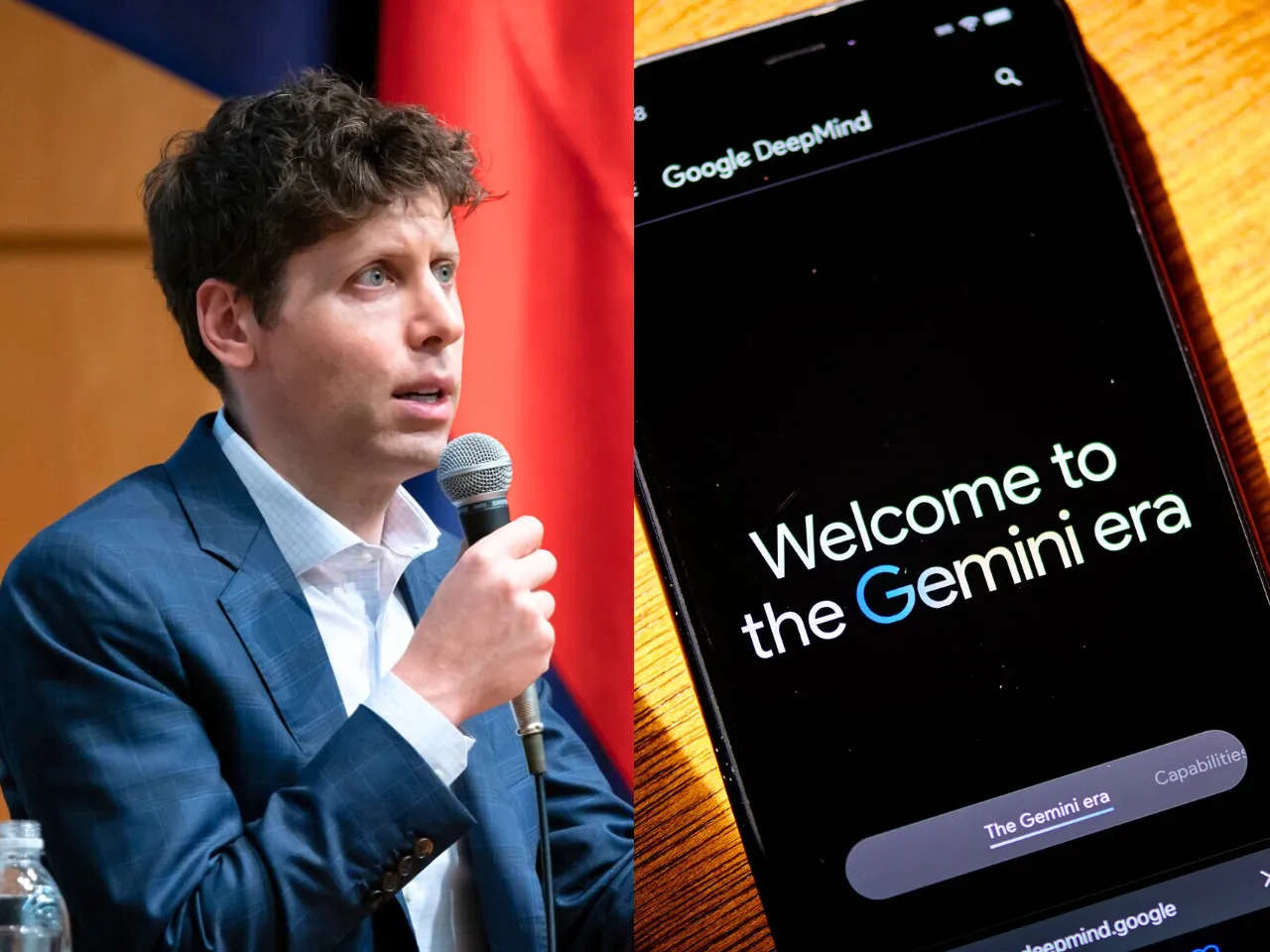

The battle for AI supremacy is heating up. Recent data shows that OpenAI’s flagship product, ChatGPT, has seen a sharp drop in web traffic over the past six weeks, while Google’s Gemini has remained steady, gradually closing the gap. This is more than just numbers — it reflects shifting user behavior and the emergence of serious competition in the AI assistant market.
The Numbers Behind the Drop
Between mid-November 2025 and early January 2026, ChatGPT’s average daily visits fell from about 203 million to 158 million, marking a 22% decline in just over a month. In comparison, Google’s Gemini recorded 55–60 million daily visits during the same period, holding steady. While ChatGPT still leads in raw numbers, the trend is what’s drawing attention.
Changing Market Share
The decline in traffic has directly affected ChatGPT’s market share. As of early January 2026, ChatGPT accounted for roughly 64.5% of global generative AI traffic, down from 68% in December 2025 and a whopping 86% a year ago.
Meanwhile, Gemini has grown dramatically, now controlling around 21.5% of the market, up from just 5.7% a year ago. This rapid growth positions Gemini as the most formidable challenger to ChatGPT so far.
Why ChatGPT May Be Losing Users
Several factors could explain ChatGPT’s slowdown:
Rising Competition
More AI tools are entering the market, giving users alternatives to ChatGPT. Among these competitors, Gemini stands out because of Google’s ecosystem and brand recognition.
User Saturation
Generative AI is maturing, and the initial excitement may be fading. Many users now selectively use a few platforms rather than trying every tool.
What Makes Gemini Attractive
Google has a built-in advantage: Gemini is integrated across products like Google Search, Gmail, Android devices, and Workspace apps. Users often interact with it without consciously choosing a separate chatbot, giving Gemini broader exposure.
The release of Gemini 3 in late 2025 also sparked renewed interest, making it an appealing alternative to ChatGPT.
Is This a Crisis for OpenAI?
Not immediately. ChatGPT still leads in total users and recognition, with a vast global presence and developer ecosystem. However, the decline signals that the market is no longer uncontested, and OpenAI may need to adjust strategies to maintain its dominance.
What This Means for the Future of AI Assistants
The generative AI landscape is evolving rapidly:
-
ChatGPT remains the leader but is losing market share.
-
Gemini is the fastest-growing major competitor.
-
Other tools are also carving out niches, creating a diverse AI ecosystem.
Users are increasingly choosing platforms based on capabilities, integration, and convenience rather than just novelty.
Engagement Matters
Beyond traffic, user engagement is key. Early indicators suggest Gemini users may spend more active time interacting with the platform compared to some ChatGPT sessions. This deeper engagement could affect long-term loyalty and retention, even if total traffic remains lower.
The Bottom Line
ChatGPT still dominates, but the landscape is shifting. Gemini’s growth signals that competition in AI is no longer theoretical—it’s happening in real time. For users, this means more options and better tools. For businesses and developers, it’s a reminder that the AI world is dynamic and constantly evolving.
The next chapter of the AI rivalry is just beginning, and the battle for dominance will shape how we work, learn, and interact with intelligent systems for years to come.