

India’s instant delivery boom is facing a reality check. Blinkit, the country’s largest quick commerce platform, is warning that the sector could be heading for a major shakeout as competitors’ cash dries up. With billions invested by global giants like SoftBank, Temasek, and Middle Eastern sovereign funds, the stakes have never been higher.
Here’s why Blinkit’s CEO says the bubble is close to bursting—and why his company plans to come out on top.
The Quick Commerce Gold Rush
Massive Investments
Quick commerce startups promise groceries and essentials delivered in minutes. Investors poured billions, betting on rapid growth and urban consumer demand.
Global Backing
SoftBank, Temasek, and Middle Eastern sovereign funds are the biggest names driving the sector, hoping to dominate India’s fast-paced delivery market.
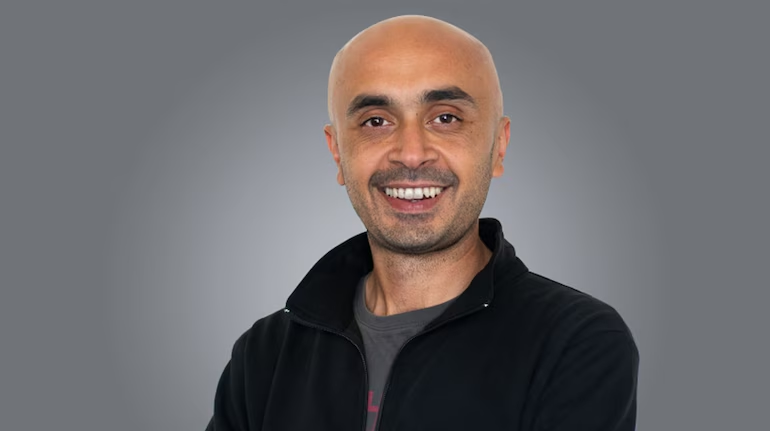
Blinkit CEO Issues Warning
Rivals Running Out of Cash
The Blinkit CEO warns that many competitors are burning money faster than revenue can grow. This overextension could lead to bankruptcies and consolidation.
Shakeout on the Horizon
A major shakeout may be imminent, leaving only well-capitalized and efficient companies like Blinkit to survive the turbulent market.
Blinkit’s Survival Strategy
Strong and Ready
Blinkit claims its operational efficiency and access to capital give it a huge advantage over struggling competitors.
Expanding Aggressively
Rather than slowing down, Blinkit plans to grow its footprint and delivery network, ready to capture market share from faltering rivals.
Implications for Investors and Consumers
Investors
The bubble warning signals high risk for overvalued startups but also opportunity for strategic investments in strong players like Blinkit.
Consumers
While some smaller players may disappear, Blinkit and other leading platforms are likely to continue providing fast delivery, ensuring minimal disruption for urban customers.
Blinkit’s CEO has delivered a stark warning: India’s quick commerce bubble may be about to burst. Weak rivals could vanish, while Blinkit positions itself as the dominant survivor.
This shakeout could redefine India’s instant delivery market forever—investors and consumers should watch closely.