


Designing a semiconductor chip is one of the most complex engineering challenges in the world. It takes years, costs millions of dollars, and demands highly specialized expertise. Even small errors can delay production and inflate budgets dramatically.
A new deeptech startup, Tattvam AI, believes artificial intelligence can fundamentally change that.
The company has raised $1.7 million in pre-seed funding in a round led by Seedcamp, with participation from EWOR, Entropy Industrial Ventures, Concept Ventures, and semiconductor veteran Stan Boland.
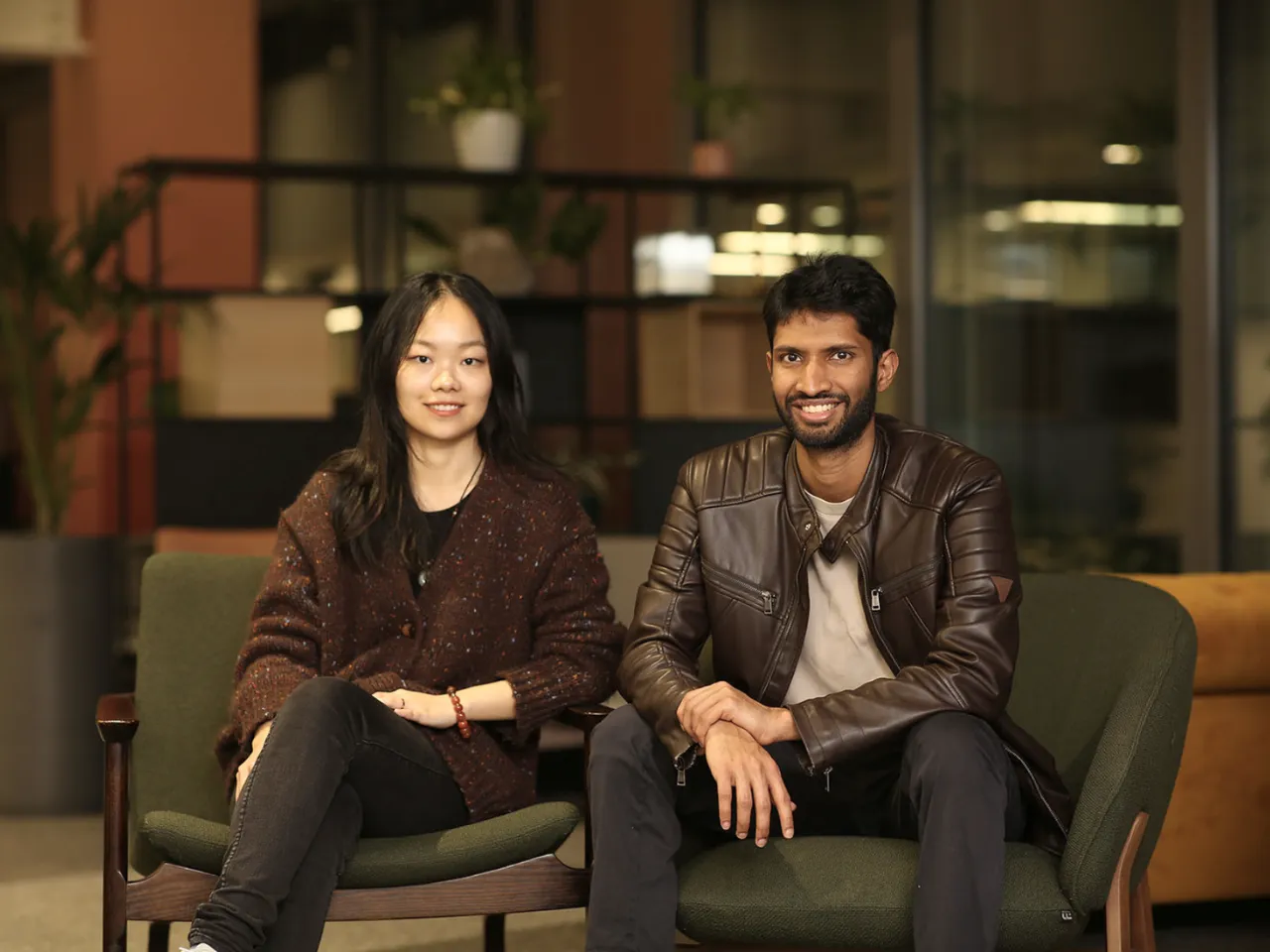
Founded by IIT Madras alumnus Bragadeesh Suresh Babu, Tattvam AI is building AI systems designed to automate and dramatically accelerate semiconductor chip design.
The Real Bottleneck in the Semiconductor Industry
The global semiconductor industry powers everything from smartphones and electric vehicles to AI data centers. But while demand for chips is exploding, the design process remains slow and complex.
Traditional chip development can take two to three years from concept to tape-out. Engineers rely heavily on Electronic Design Automation tools, manual iterations, and extensive validation cycles.
Each design involves navigating an enormous search space of constraints, trade-offs, and interdependencies — including power consumption, performance, area, and thermal limits.
Even the most advanced AI tools available today struggle with this depth of structural reasoning.
That is the problem Tattvam AI is trying to solve.
A New Approach: AI That Understands Circuits from First Principles
Unlike conventional AI tools that assist in narrow tasks, Tattvam AI is building what it describes as a reasoning model for circuits.
According to CEO Bragadeesh Suresh Babu, chip design is fundamentally a reasoning challenge over a vast search space — similar in complexity to solving advanced mathematical problems.
Current large language models may generate code or text, but they lack a deep structural understanding of circuits. They do not fully grasp constraints, trade-offs, or the intricate relationships between components.
Tattvam AI aims to change that.
AI as a Chip Engineer
The company is developing an AI system that:
-
Understands circuit structures at a foundational level
-
Reasons about constraints and trade-offs
-
Solves complex design tasks autonomously
-
Iterates at speeds far beyond human capability
In essence, the goal is to build an AI that thinks like a world-class chip engineer — but operates in a fraction of the time.
By automating key parts of the design process, Tattvam AI intends to reduce development cycles from years to weeks.
Why Faster Chip Design Matters
Speed in semiconductor design is not just a convenience — it is a competitive advantage.
Companies increasingly need application-specific chips tailored for AI workloads, automotive systems, robotics, and edge computing. General-purpose chips are often inefficient for highly specialized tasks.
However, custom silicon has historically been accessible only to large corporations with deep pockets and extensive engineering teams.
If Tattvam AI succeeds, it could:
-
Make custom chip design accessible to more companies
-
Reduce development costs significantly
-
Enable rapid prototyping and iteration
-
Accelerate innovation across industries
Instead of waiting years to refine a design, teams could test and optimize chips in weeks.
That kind of speed could dramatically reshape product development cycles in hardware.
Backed by Industry and Venture Leaders
The $1.7 million pre-seed round signals strong early confidence in Tattvam AI’s approach.
Seedcamp, one of Europe’s most established early-stage investors, led the round. Known for backing ambitious technology startups, the firm sees potential in AI-driven transformation of deep industrial sectors.
Stan Boland’s participation is particularly notable. Boland previously founded Icera, which was acquired by NVIDIA, and Element 14, which was acquired by Broadcom. His endorsement adds significant industry credibility.
Boland described Bragadeesh as one of the most driven young founders in the chip industry and expressed confidence that Tattvam AI’s technology could dramatically speed up the complex and iterative process of chip design.
From IIT Madras to Deeptech Disruption
Bragadeesh Suresh Babu, an alumnus of IIT Madras, represents a new generation of founders tackling foundational technology challenges rather than consumer-facing apps.
Semiconductor design sits at the core of modern computing. Any meaningful improvement in this process has far-reaching implications — from faster AI systems to more efficient electronics.
By focusing on deep reasoning models tailored specifically to circuits, Tattvam AI is positioning itself at the intersection of artificial intelligence and hardware engineering.
The Bigger Trend: AI Moving Into Core Engineering
Much of the AI wave has focused on text, images, and software development. But a new frontier is emerging — applying AI to complex physical systems and industrial design.
Chip design is a prime candidate for this transformation because:
-
It involves structured reasoning and constraints
-
It generates large volumes of technical data
-
It requires repetitive simulation and optimization cycles
If AI can reliably navigate this complexity, it could unlock a new era of hardware innovation.
Tattvam AI is betting that the future of semiconductors will not just be about smaller transistors, but smarter design systems.
What Comes Next for Tattvam AI
With fresh capital in hand, the company is expected to focus on:
-
Advancing its reasoning-based AI models
-
Validating performance across real-world chip design workflows
-
Partnering with semiconductor teams for early adoption
-
Expanding its engineering talent
At the pre-seed stage, the mission is clear: prove that autonomous reasoning in chip design is not just possible, but practical.
If successful, Tattvam AI could reduce one of the most time-consuming and expensive bottlenecks in the semiconductor industry.
In a world racing toward AI-driven everything, the irony is striking: the next leap in artificial intelligence may depend on AI itself designing the chips that power it.