

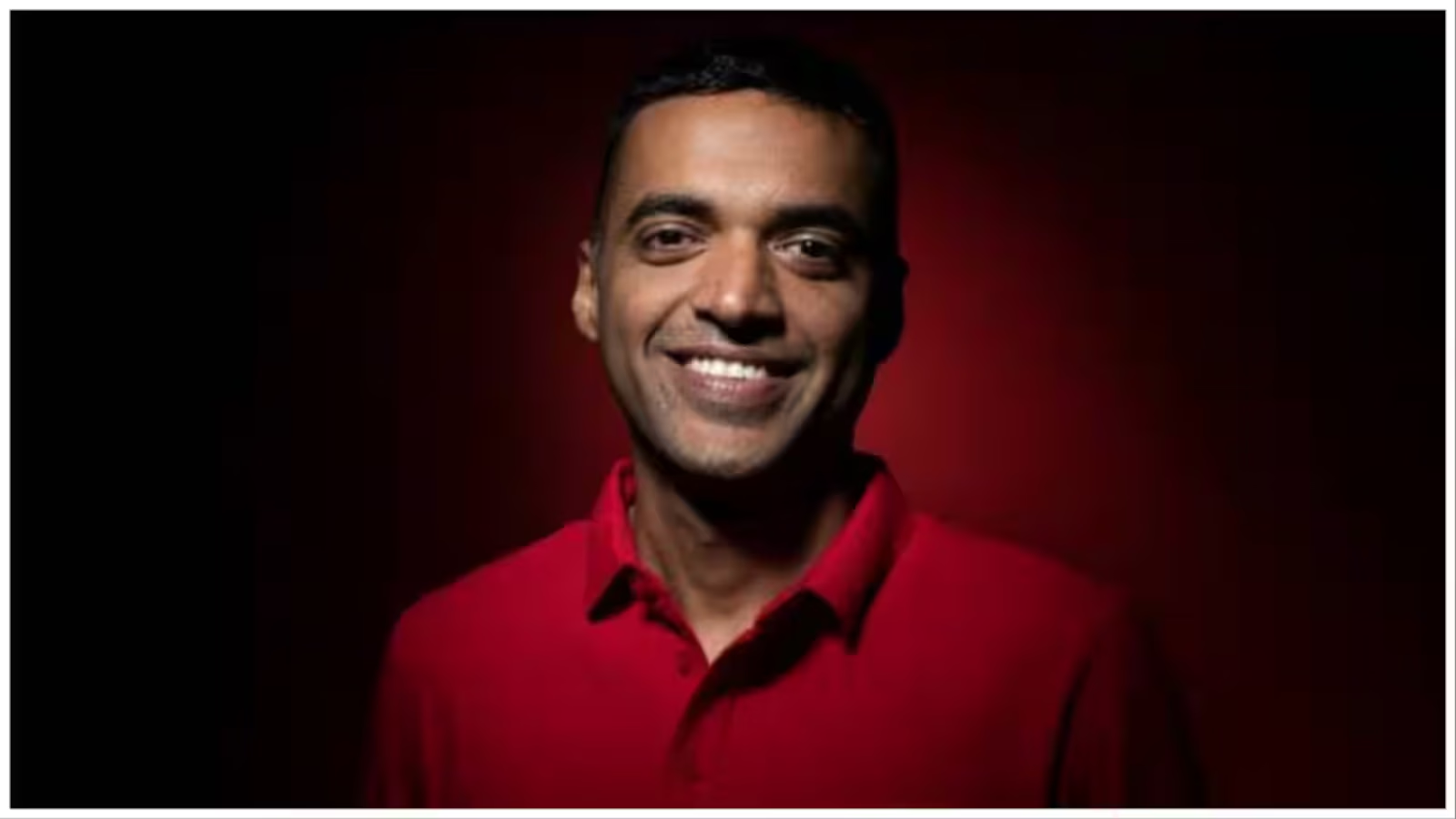

As debates around gig work, platform accountability, and worker welfare intensify in India, a personal account by Assessli CEO Biswas has added a nuanced perspective to the conversation. In a detailed LinkedIn post, Biswas publicly expressed support for Zomato founder and CEO Deepinder Goyal, sharing his own experience of working as a Zomato delivery partner in Bengaluru during 2020–21.
Rather than portraying gig work as a last-resort or exploitative arrangement, Biswas framed it as a source of dignity, flexibility, and financial independence—one that played a critical role in shaping his entrepreneurial journey. His comments come at a time when gig economy platforms are often scrutinised for income volatility, lack of social security, and worker protections, but also recognised for creating large-scale employment opportunities.
A Personal Journey Before Entrepreneurship
Biswas revealed that he worked as a Zomato delivery partner before founding Assessli and before his college education “really took off.” At the time, he was navigating financial constraints common to many students and early-stage entrepreneurs. Gig work, he said, allowed him to manage his expenses without depending on family support or external funding.
According to his post, the income he earned helped him pay college fees, support his early startup team, and maintain financial independence during a crucial phase of his life. Importantly, he rejected narratives that frame delivery work as something that warrants sympathy.
“I didn’t need sympathy. I needed opportunity,” he wrote, underlining that the work gave him control over his time and earnings rather than a sense of helplessness.
Earnings and Economic Reality of Gig Work
Sharing specific figures, Biswas stated that he earned around Rs 40,000 per month consistently while working as a delivery partner. He also mentioned personally knowing several delivery partners who earned between Rs 80,000 and Rs 90,000 a month, particularly those who were willing to put in longer hours or work across peak demand periods.
He further noted that many riders operated simultaneously on two or three platforms, a common practice in the gig economy. This, he argued, demonstrates that gig work is fundamentally flexibility-driven rather than structured as exclusive or traditional full-time employment.
By highlighting these earnings, Biswas aimed to counter the perception that gig work invariably traps workers in low-income cycles. Instead, he positioned it as a merit-based system where effort, time management, and strategic choices can significantly influence outcomes.
Flexibility Over Formality
One of the central themes of Biswas’s post was flexibility. He emphasised that gig platforms offer workers the autonomy to decide when, where, and how much they want to work—an option not always available in traditional entry-level jobs.
For students, aspiring entrepreneurs, migrants, and individuals between jobs, this flexibility can be especially valuable. Biswas argued that expecting gig work to mirror conventional employment structures misses the point of why many workers choose such platforms in the first place.
He acknowledged that gig work is not without challenges, but suggested that it should be evaluated as an alternative economic model rather than judged by the standards of permanent salaried employment.
Standing with Deepinder Goyal
By stating “I stand with Deepinder,” Biswas aligned himself with Zomato CEO Deepinder Goyal amid ongoing public debates around gig worker conditions and platform responsibilities. While critics often argue that platforms should provide greater security and benefits, supporters point out that imposing rigid employment frameworks could undermine the flexibility and scalability that make gig work viable.
Biswas’s stance does not dismiss the need for safeguards, but it stresses that policy discussions should be grounded in real worker experiences rather than assumptions. His story illustrates how gig platforms can serve as stepping stones rather than endpoints—helping individuals bridge financial gaps, invest in education, or pursue entrepreneurial ambitions.
Gig Work as a Launchpad, Not a Label
Today, Biswas leads Assessli, a growing company, but he credits his time as a delivery partner for instilling discipline, resilience, and self-reliance. For him, gig work was not a label that defined his worth, but a phase that enabled upward mobility.
His account resonates with a broader segment of India’s workforce that views gig platforms as practical tools rather than permanent careers. In a country with a young population and limited formal job creation, such platforms have absorbed millions into the economic mainstream.
A Broader Conversation on the Gig Economy
Biswas’s post has sparked discussion online, with many users sharing similar experiences of using gig work to fund education, manage household expenses, or bootstrap startups. At the same time, others continue to raise concerns about income stability, health insurance, and long-term security.
The debate highlights the need for balanced solutions—ones that preserve flexibility while gradually introducing safety nets tailored to the unique nature of gig work. Rather than a one-size-fits-all approach, policymakers and platforms may need to explore hybrid models that reflect the diversity of worker motivations and circumstances.
The story shared by Assessli CEO Biswas adds an important, first-hand voice to India’s gig economy discourse. By recounting his experience as a Zomato delivery partner, he challenges simplistic narratives of exploitation and underscores the role gig platforms can play in enabling independence, dignity, and opportunity.
As India’s digital economy continues to expand, such perspectives are crucial in shaping informed, empathetic, and pragmatic conversations about the future of work—conversations that recognise both the challenges and the transformative potential of the gig economy.