

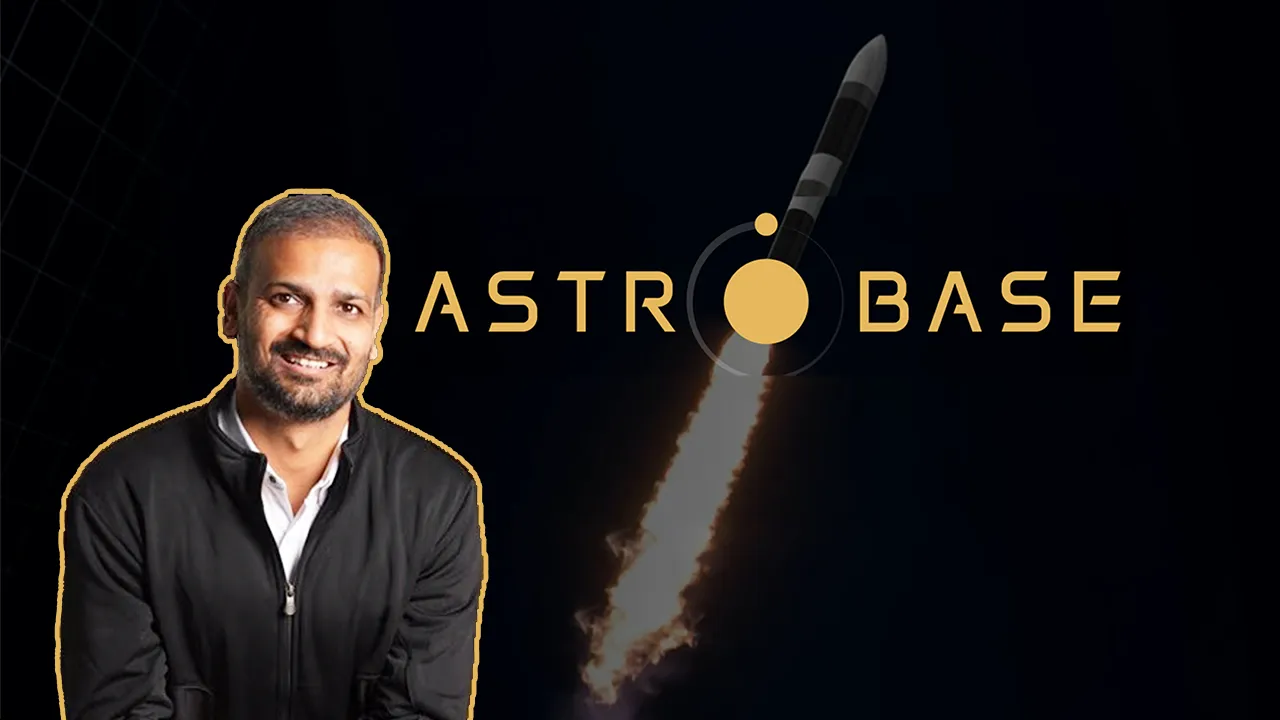

India’s space startup ecosystem just got a huge boost. Astrobase, a Bengaluru-based space technology startup, has quietly raised $10 million in a seed funding round and is gearing up to change the satellite launch game. What makes this story even more intriguing is that the company is co-founded by Neeraj Khandelwal, one of the brains behind India’s leading crypto exchange CoinDCX, and is working alongside a team of senior scientists from ISRO, India’s premier space agency.
This partnership between an entrepreneur from the private sector and experts from a government agency signals a new era where India’s space ambitions are accelerating with private innovation and government collaboration. Let’s dive into what Astrobase is building, why their plans matter, and how this startup fits into the broader Indian space revolution.
Astrobase’s Mission: Affordable and Efficient Satellite Launch Vehicles
Astrobase is developing cutting-edge launch vehicles designed to drastically reduce the cost of putting satellites into orbit. With the global space economy booming and demand for satellite launches soaring, the need for affordable, reliable, and high-payload launch systems has never been greater.
The company’s core technology revolves around a methane-oxygen full flow staged combustion engine. This is a highly advanced type of rocket engine known for its efficiency and reusability potential. By harnessing this technology, Astrobase aims to build launch vehicles capable of carrying payloads between 3 to 10 tonnes, which fits well within the growing market for small to medium satellites.
What sets Astrobase apart is their plan to offer three different configurations for their launch vehicles:
- Fully expendable rockets, which are used once and discarded
- Partially reusable rockets, which recover some parts for reuse
- Fully reusable rockets, which can be launched multiple times with minimal refurbishment
The holy grail of modern spaceflight is full reusability, as demonstrated by companies like SpaceX. Astrobase is targeting this with an ambitious goal to bring launch costs down to around $300 per kilogram by 2034 — a price point that would be highly competitive globally and a significant step forward for India’s space capabilities.
From Concept to Production: Engine Manufacturing in Bengaluru
Unlike many early-stage startups still stuck in the research phase, Astrobase is rapidly moving towards manufacturing. The company has secured an engine manufacturing facility in Bengaluru, located in India’s aerospace hub. This facility is ready to start producing engines based on the designs that have already been finalized.
Having a dedicated manufacturing unit means Astrobase is no longer just a concept — it is a working space technology company ready to build and test hardware. The presence of 10 senior ISRO scientists on the team brings decades of aerospace experience, boosting the startup’s credibility and technical expertise.
Their engine and vehicle designs are for an orbital-class launch system, meaning these rockets are intended to carry payloads into stable Earth orbits rather than just suborbital flights, positioning Astrobase squarely in the satellite launch market.
Strong Financial Backing and Valuation
Astrobase’s maiden funding round was led by BanyanCo, a venture capital firm known for backing deeptech startups. Initial regulatory filings indicated that the company raised about Rs 60 crore (around $7 million), but co-founder Neeraj Khandelwal clarified that the actual seed round was $10 million.
This funding round values the startup at approximately Rs 623 crore (about $72 million), reflecting investor confidence in the company’s vision and technical roadmap. Astrobase is already preparing for its next round of fundraising, which will likely increase its valuation as the startup progresses towards hardware testing and initial launches.
Why Astrobase’s Launch Vehicles Matter
Satellite launches are a critical part of the rapidly expanding space economy, powering everything from global internet coverage and weather forecasting to defense and scientific research. India has made huge strides in space technology over the past decades, but historically, satellite launch costs have remained high compared to global standards.
Reducing launch costs can democratize access to space for Indian startups, research institutions, and private companies. It can also help India establish itself as a global launch hub, exporting launch services worldwide.
Astrobase’s focus on methane-oxygen engines is also important from a sustainability and efficiency standpoint. Methane is cleaner-burning and easier to reuse than traditional rocket fuels, making it the preferred choice for next-generation reusable rockets.
The Growing Space Startup Ecosystem in India
Astrobase’s rise coincides with a surge in India’s private space sector. In 2024 alone, 13 space startups raised around $85 million, signaling robust investor interest. This momentum has carried into 2025, with over $15 million already raised by space tech startups.
Recognizing this potential, the Indian government has taken proactive steps to boost the industry:
- Launching a Rs 500 crore ($58 million) fund through IN-SPACe, the Indian National Space Promotion and Authorization Center, to nurture private space startups
- Approving a Rs 1,000 crore ($116 million) venture capital fund dedicated to supporting space technology development
These initiatives aim to reduce India’s reliance on foreign imports in the space sector, accelerate local innovation, and encourage private sector participation in what was once a purely government domain.
What Lies Ahead for Astrobase?
With a solid funding base, access to expert talent, and a clear technological focus, Astrobase is poised to become a key player in India’s space ecosystem. The company plans to ramp up production of its launch engines, move towards rocket assembly and testing, and prepare for orbital launches in the coming years.
The startup’s vision to drastically cut launch costs and build reusable rockets aligns with global trends shaping the future of space exploration and commercialization.
If Astrobase succeeds, it won’t just be a win for the company but for the entire Indian space ecosystem — opening doors for more startups, accelerating satellite deployment, and expanding India’s footprint in the global space economy.
Final Thoughts
Astrobase represents the exciting fusion of private entrepreneurship and government expertise that is driving India’s new space age. The partnership between Neeraj Khandelwal and senior ISRO scientists is a powerful example of how deep technical knowledge combined with innovative business thinking can push boundaries.
As the company advances from research labs to rocket manufacturing, all eyes will be on how quickly Astrobase can transform its ambitious plans into real launches. With $10 million in the bank and an experienced team, this startup is one to watch closely — it might just launch India’s satellite launch capabilities into a whole new orbit.